Pilates for Rehabilitation and Injury Prevention
This article is created in collaboration with the APPI (The Australian Physiotherapy & Pilates Institute), whose approach to Pilates for injury prevention and rehabilitation informs this guide.

(Photo: APPI)
Most injuries don’t happen in a dramatic moment; they build up quietly – a slightly weakened core, an awkward bend, a slight twist - until one ordinary movement asks too much of an already-compensating body.
Pain affects billions globally1, with 60% of adults2 experiencing back pain at some point in their lives, much of it tracing back to this kind of everyday compensation. This is why many physiotherapists point to Pilates as one of the most effective types of exercise for injury prevention, not because it's gentle, but because it retrains the way your body moves before problems start.
Devised by Joseph Pilates in the early 20th century and often described as a ‘mind-body exercise’3, Pilates is nowadays recognised for its ability to help build strength, flexibility and overall body awareness.
Why Pilates Works for Injury Prevention
Pilates aids injury prevention by building core strength, improving flexibility, and balancing muscle development – reducing the compensation patterns that most everyday injuries stem from. According to APPI’s approach, that comes down to three things: stability, alignment, and control.
In contrast to traditional training that focuses on one or a group of muscles at a time, Pilates trains muscle groups to work together – particularly the deep abdominal and pelvic muscles that support the spine during everyday movement.
Low impact by design, Pilates combines dynamic stretching with strength training and focused breathwork, which allows strength to build without adding unnecessary load to areas that are already vulnerable.
How Pilates Aids in Improving Posture
A huge amount of modern injury risk starts with posture, not sport4. Long hours at a desk, hunched over a phone, or sitting in the car - all contribute to the same postural faults: rounded shoulders, an anteriorly tilted pelvis, a stiff thoracic spine. Left unaddressed, these patterns lead to repetitive strain over months and years.
According to APPI, the real issue isn’t that we don’t move enough but that we don’t move well. Workplace ergonomics has helped us move more, but good posture under load is a separate skill and one Pilates is specifically built to train.
APPI’s approach is predicated on five core elements, four of which focus specifically on posture: centring the pelvis and lower back, correctly positioning the rib cage, and maintaining neutral alignment through the shoulders, head, and neck.

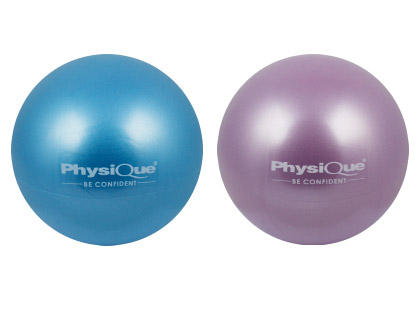
(Photo: APPI. Equipment Physique Soft Pilates Ball)
While much of the everyday conversation around Pilates centres on the back, its benefits extend well beyond it. A 2023 systematic review found Pilates was associated with reduced pain intensity in people with musculoskeletal conditions affecting the shoulder, knee, and other extremities, alongside improvements in quality of life5. The same principles that protect the spine - controlled movement, balanced muscle development, and core stability - also help correct the compensatory patterns behind issues like shoulder impingement, knee instability, and recurring hamstring strain.
Pilates for Every Body

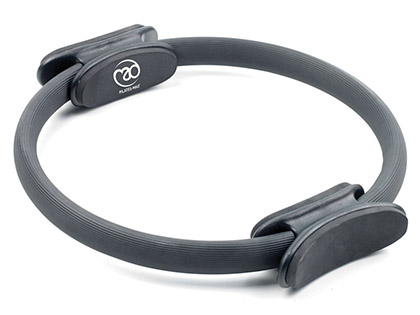
(Photo: APP. Equipment Physique Pilates Ring)
One of the most valuable things about Pilates as an injury-prevention and rehabilitation instrument is how adaptable it is. It can be tailored to fitness level, existing injury, and specific goals, which is part of why it's used across such a wide range of settings - from elite athletes managing sport-specific movement demands, to office workers dealing with a sore back from a desk job, to people recovering from surgery or a long-term injury.
Back pain and Pilates often come up together for exactly this reason - a sore back is rarely about one single event, and a tailored programme can address the underlying movement pattern rather than just the symptom. This is particularly relevant for conditions like sciatica, where nerve-related leg pain often stems from the same postural and core-stability issues Pilates is designed to address - you can read more in our guide to easing sciatica pain.
APPI’s approach, in particular, encourages instructors and physiotherapists to work together, sharing insight into an individual’s injury history and movement patterns because the exercise programme is genuinely built around the person rather than a generic routine.
Pilates for Athletes: Prevention and Preparation
It isn't only inactive or recovering bodies that benefit. Professional and competitive athletes increasingly use Pilates as part of routine training and preparation, not just rehabilitation after injury. In one study, experienced runners who added twice-weekly mat Pilates sessions over 12 weeks showed measurably improved running economy and faster times, attributed to better control and stabilisation6. Separate research into recurring back pain among cyclists has pointed to the same core and postural control Pilates trains as a key factor in staying injury-free through a demanding season7. For athletes managing repetitive, sport-specific movement demands, Pilates offers a low-impact way to build the stability and control that underpins both performance and durability.
Want to Go Deeper? APPI's Pilates Teacher Training Courses
Reading about these principles is one thing - learning to teach and apply them properly from a leading Pilates teacher training provider is another. APPI runs a range of courses depending on where you're starting from:
-
New to Pilates is the natural starting point if you're completely new and want to pursue becoming a Pilates instructor. It offers proper grounding in the principles covered above with a focus on mat-work foundations or, if you prefer to teach Reformer, you can go down the Reformer pathway.
-
If you're a personal trainer or fitness instructor looking to add Pilates-based injury prevention to your own practice, APPI's courses for Personal Trainers and Fitness Professionals build on exactly this kind of movement-quality thinking.
-
For physiotherapists, sports therapists and other allied health professionals, there's a dedicated Allied Health Professionals pathway, including more specialised CPD courses.
For those of you who want to try Pilates exercises for your own injury prevention and rehabilitation, you can use APPI's Instructor Directory to find an APPI-trained instructor near you and find a class.
When to Get Professional Input
A common question at this point is: is Pilates good for back problems specifically, or just general prevention? The honest answer is both - but the more specific or persistent the issue, the more it's worth working with a qualified physiotherapist or Pilates instructor, such as one trained in the APPI method, to tailor a programme to you rather than following a generic routine. If you're managing an existing injury or chronic pain - including recurring back pain or a specific medical condition- this is especially important. Pilates is highly adaptable, but the value of that adaptability comes from it being applied correctly to your specific movement patterns and history.
The Takeaway
Injury prevention isn't about avoiding movement - it's about moving better. Pilates offers a genuinely evidence-informed way to build the stability, alignment, and control that keep everyday movement safe, whether you're an athlete, an office worker, or simply someone who wants to stay active without setbacks. Pair it with the right recovery and support tools, and you've got a well-rounded approach to staying injury-free for the long run.
Sources and References
APPI. (2024). The Role of Pilates in Injury Prevention, Rehabilitation, and Pain Management. APPI Education. https://appihealthgroup.com/the-role-of-pilates-in-injury-prevention-rehabilitation-and-pain-management/.
Zimmer, Z., Fraser, K., Grol-Prokopczyk, H., & Zajacova, A. (2021). A global study of pain prevalence across 52 countries. Pain, Publish Ahead of Print(9). https://doi.org/10.1097/j.pain.0000000000002557.
Campbell, J. and Colvin, L.A. (2022, November). Back pain - low (without radiculopathy): How common is it? NICE. https://cks.nice.org.uk/topics/back-pain-low-without-radiculopathy/background-information/prevalence/.
Pallardy, R. (2025, May 23). Pilates | exercise | Britannica. Www.Britannica.Com. https://www.britannica.com/topic/Pilates.
Birza, C. (2022, August 25). The Role of Pilates in Improving Posture and Avoiding Injury. APPI Education. https://appihealthgroup.com/the-role-of-pilates-in-improving-posture-and-avoiding-injury/.
Kozlenia,D. & Kochan-Jachec, K. (2024). The Impact of Interaction between Body Posture and Movement Pattern Quality on Injuries in Amateur Athletes. Journal of Clinical Medicine, 13(5), 1456–1456. https://doi.org/10.3390/jcm13051456.
Aikaterini Pantelis Sivrika, Georgios Kypraios, Demetris Lamnisos, Georgoudis, G., & Dimitrios Stasinopoulos. (2024). Pilates Dosage in Rehabilitation of Patients With Musculoskeletal Conditions: A Scoping Review. Sports Health A Multidisciplinary Approach. https://doi.org/10.1177/19417381241278263.
Yilmaz, Osman & Soylu, Yusuf & Kaplan, Turgut & Taskin, Mine. (2023). HOW PILATES EXERCISES AFFECT SPORTS PERFORMANCE? A SYSTEMATIC REVIEW. Türk Fizyoterapi ve Rehabilitasyon Dergisi. 34. 367-373. 10.21653/tjpr.1211347.
Pain relief and 4 easy exercises for Sciatica. (2026). Physique.Co.Uk. https://www.physique.co.uk/Buyers-Guides/How-to-Ease-Sciatica-Pain.
Pilates for Sports Performance: Why Athletes Add It. (2026, February 27). Corpus StudiosTM. https://www.corpusstudios.com/pilates-for-athletes-performance-and-longevity/.
Hamilton, A. (2022, March 8). Core strength for injury prevention: go Pilates? Sports Performance Bulletin. https://www.sportsperformancebulletin.com/injuries-health/endurance-injuries-and-health/core-strength-for-injury-prevention-go-pilates.
Table of Contents
Further Reading
Buyers Guides
Related Products

Pilates Ring
(18)


Did you find this article useful?
Why not share this with a colleague, patient or friend?